If you’re looking for somewhere to hike in Europe, Chamonix is one of the best places you can go. It literally has it all- a lively town filled with cafes, restaurants and all the best outdoor stores, all while surrounded by dramatic peaks and, of course, Mont Blanc.
With the trails being so accessible, most from the base of the town and the rest just a short bus away, it’s the perfect place to go even if you don’t have a car. And although it’s usually seen as a luxury resort town, it’s actually one of the more affordable places to hike in the alps.
Here’s how we spent five days finding the best of Chamonix.
day 1: arriving + exploring
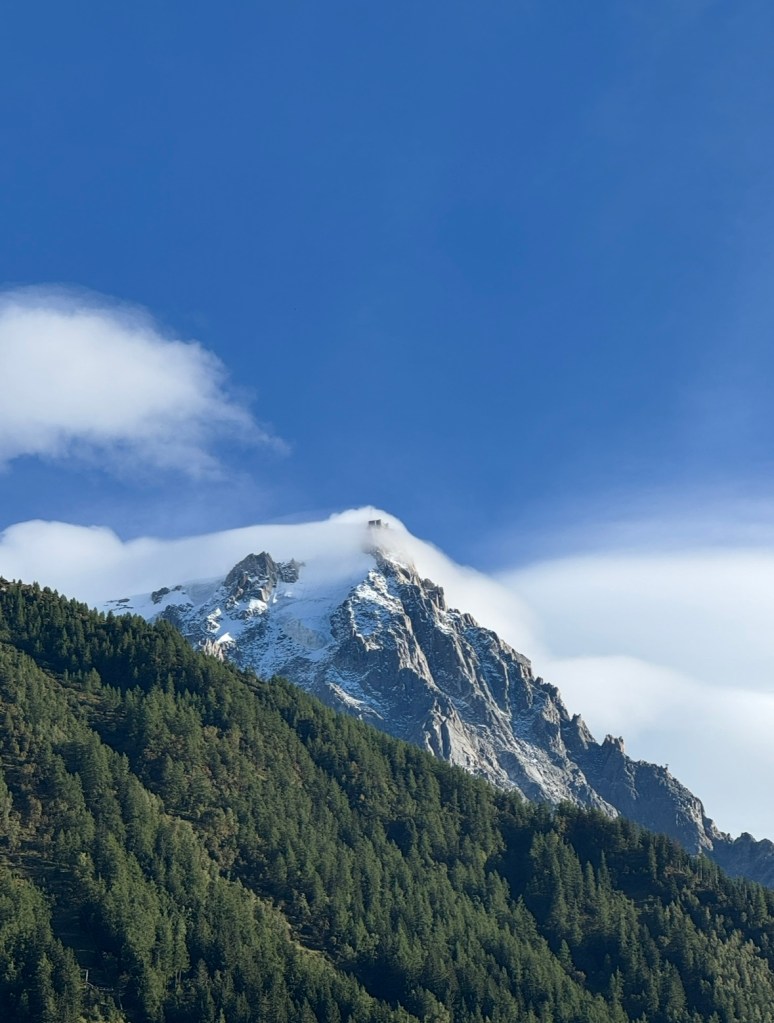
To get to Chamonix the closest airport is Geneva. From there, buses go around every hour. We paid €15 each one-way with the company Swiss Tours, booked through Omio. I would recommend booking at least one day in advance- our bus was full and tickets weren’t available on board. It only takes around 1 hour and 30 minutes to arrive in Chamonix.
We got there a few hours before our check in, so we dropped our bags in automated lockers that are beside the Plan B hotel when you arrive at the bus stop. It cost €9 for 3 hours and made it easy to explore the town while we waited for our check in.
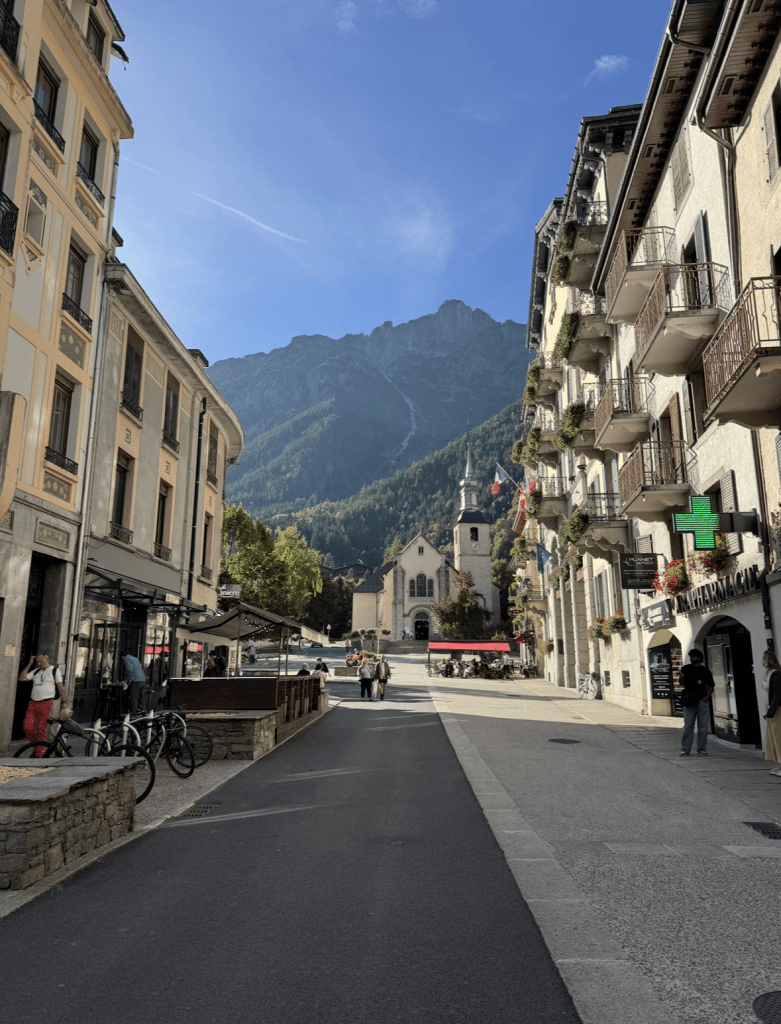
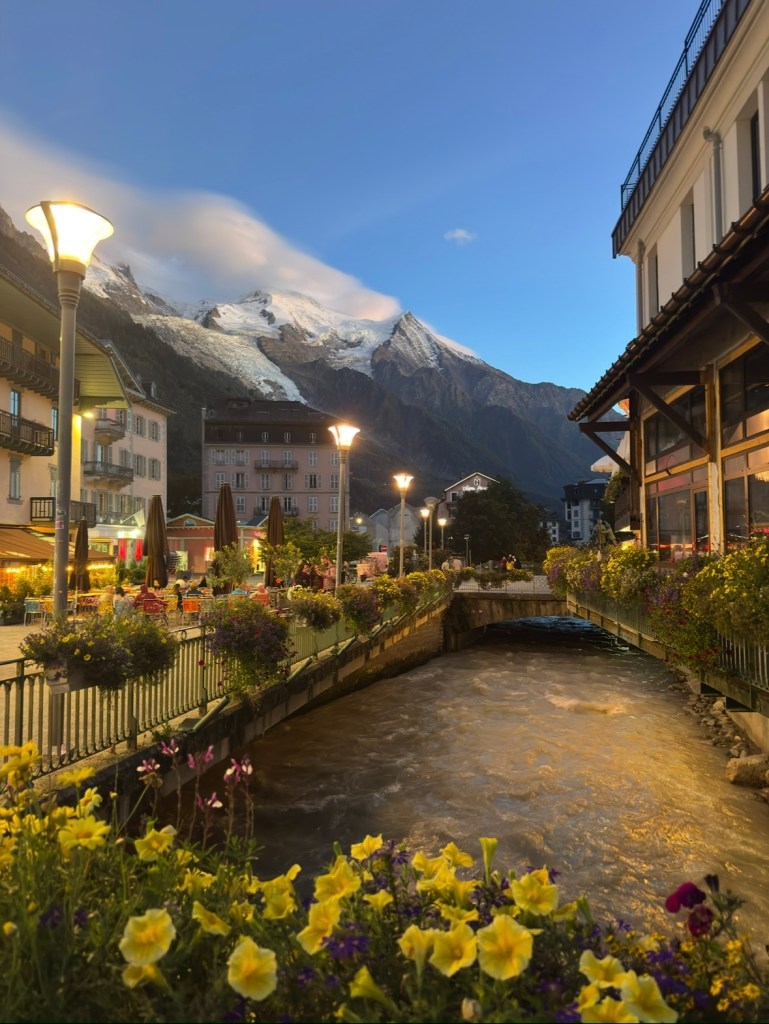
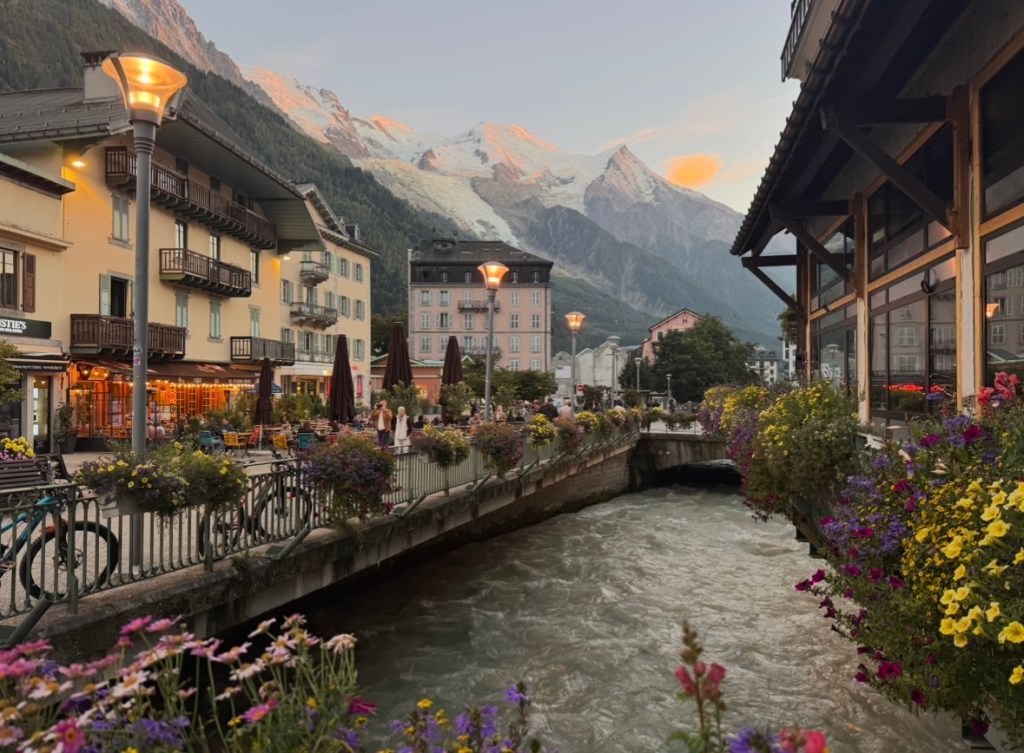
We spent the first day shopping in all of the outdoor stores- Arc’teryx, The North Face and Oakely are all here- and taking pictures around the town. We walked along the river for some of the best views of Mont Blanc.
We chose an apartment with a kitchen to save costs- our apartment was this one on booking.com and cost €40 per person per night. The balcony looked out into the valley and we had unlimited entertainment watching paragliders.
Day 2: La jonction
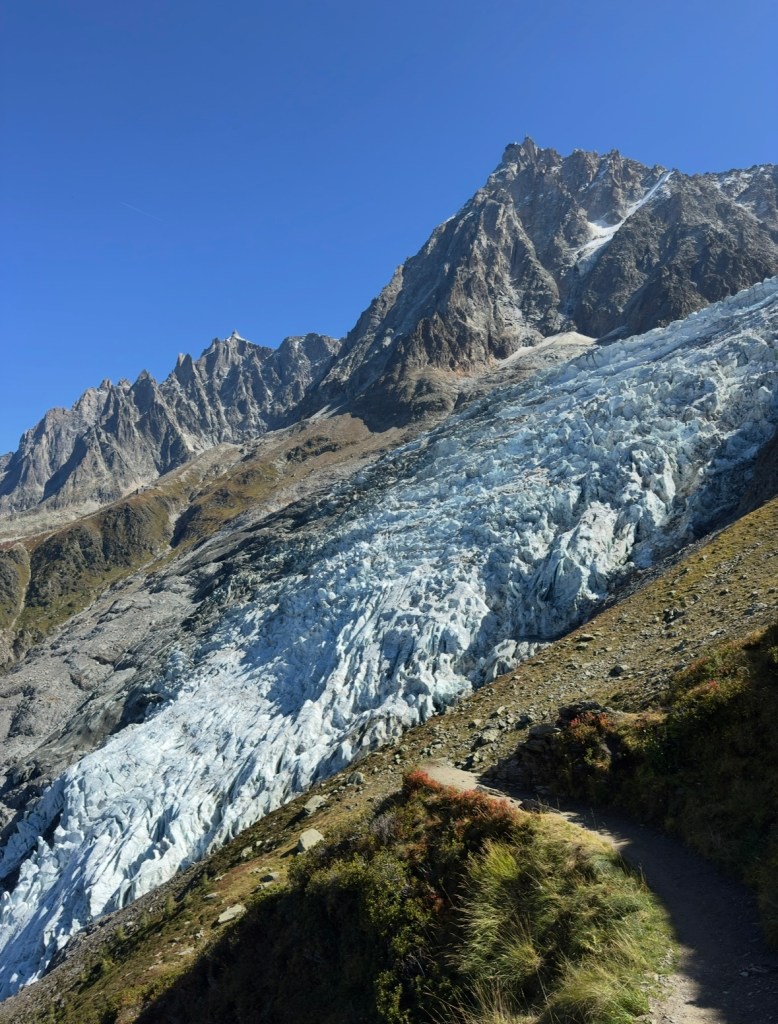
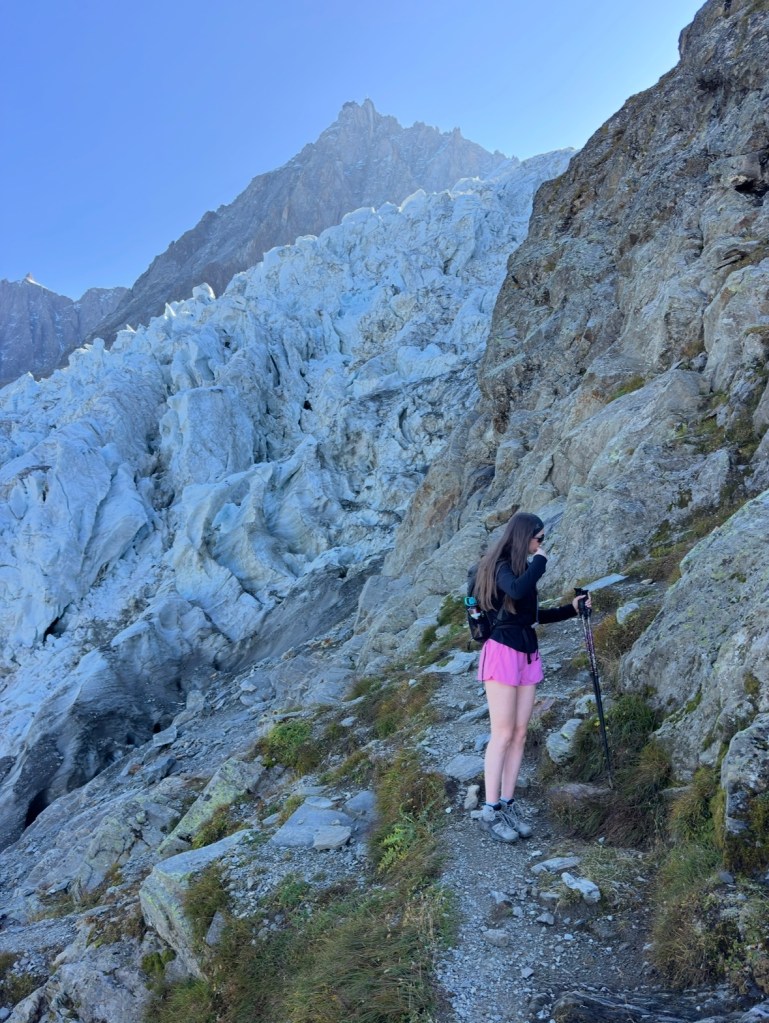
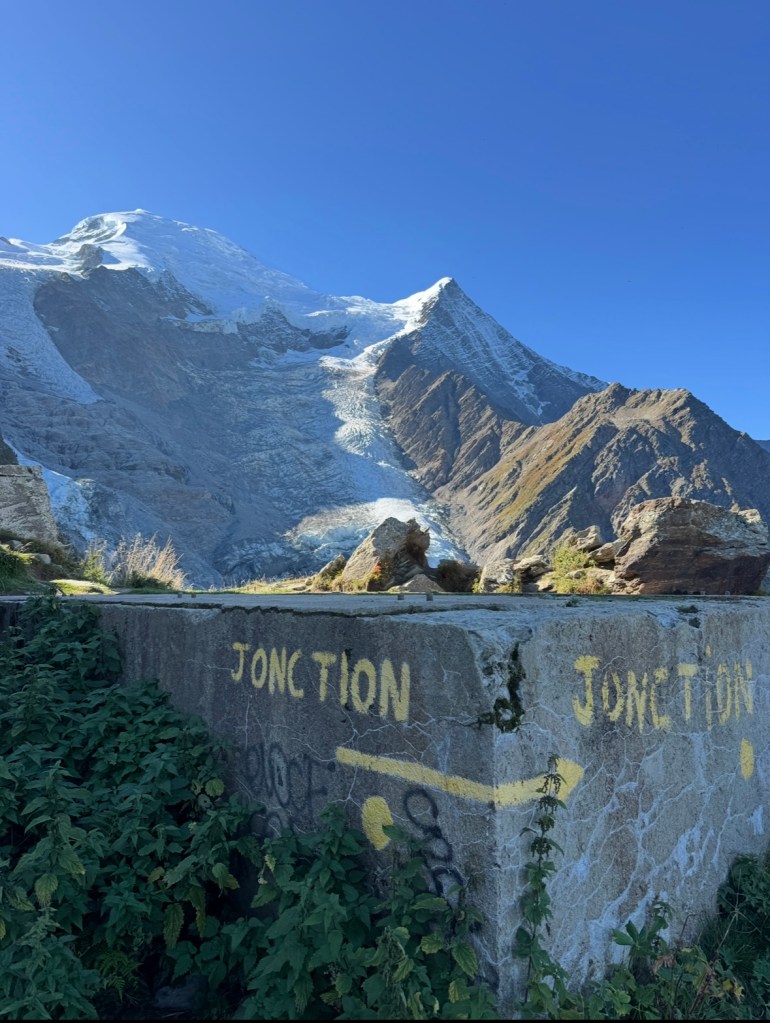
We chose to spend our first full day hiking to La Jonction– one of the trails I was most excited for and it did not disappoint. The views were genuinely some of the best I’ve ever seen, and how close you get to the glaciers feels unreal. It’s also one of the closest points to Mont Blanc you can reach on foot.
We got the bus from Chamonix Sud to Glacier Des Bossons which cost €1.50 each (you can pay with card on board) and took less than 20 minutes. From there we started the longest hike of our trip- 20.6km with 1,600 elevation.
The trail starts off steep and through a forest, which eventually opens up to all-round views of glaciers. You can actually hear the ice cracking and moving as you hike- it was such a cool experience and different from any hike I’ve done before. You get close enough to almost touch the glaciers in front of you.
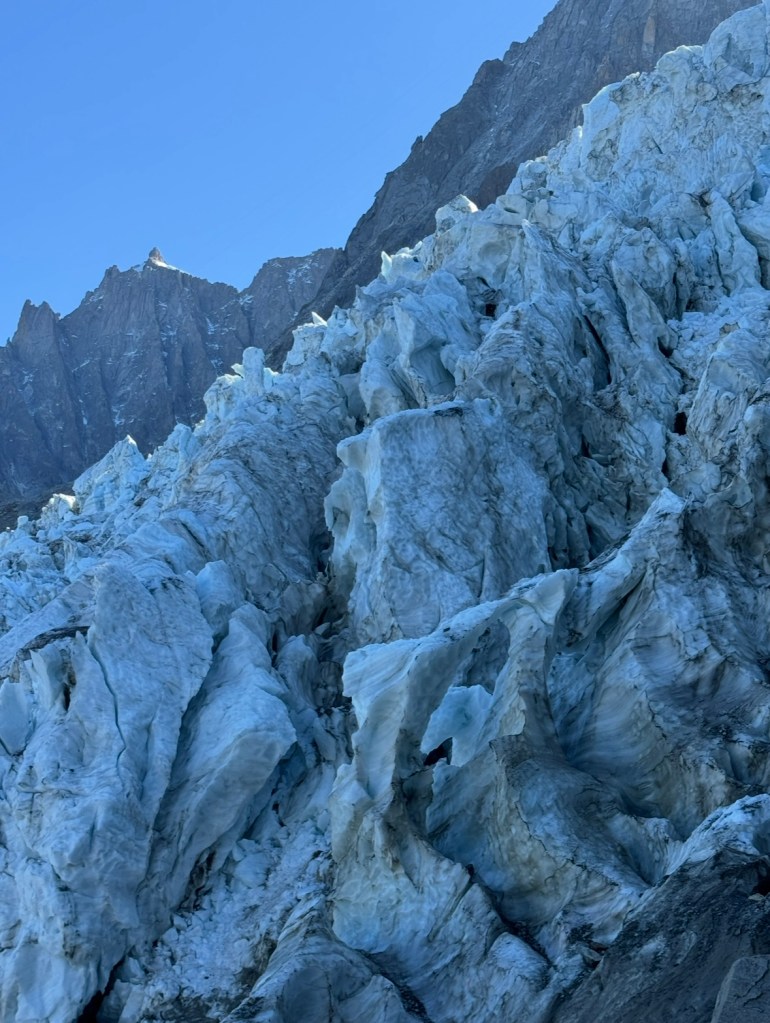

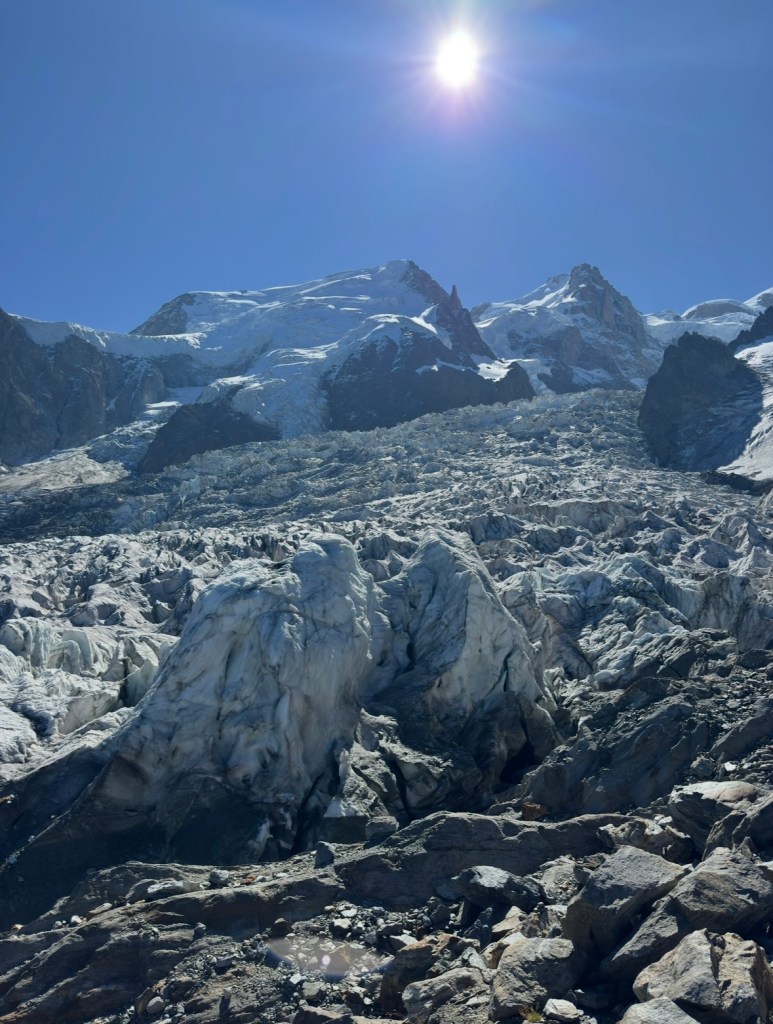
It’s a long day out, taking us around 8 hours including breaks to eat and sitting at the top to take in the view. We started the hike early, around 7 a.m., and we were surprised by how quiet it was on a clear September morning. The trail got busier as we made our way down, so an early start is definitely worth it.
day 3: Lac blanc + grand balcon sud
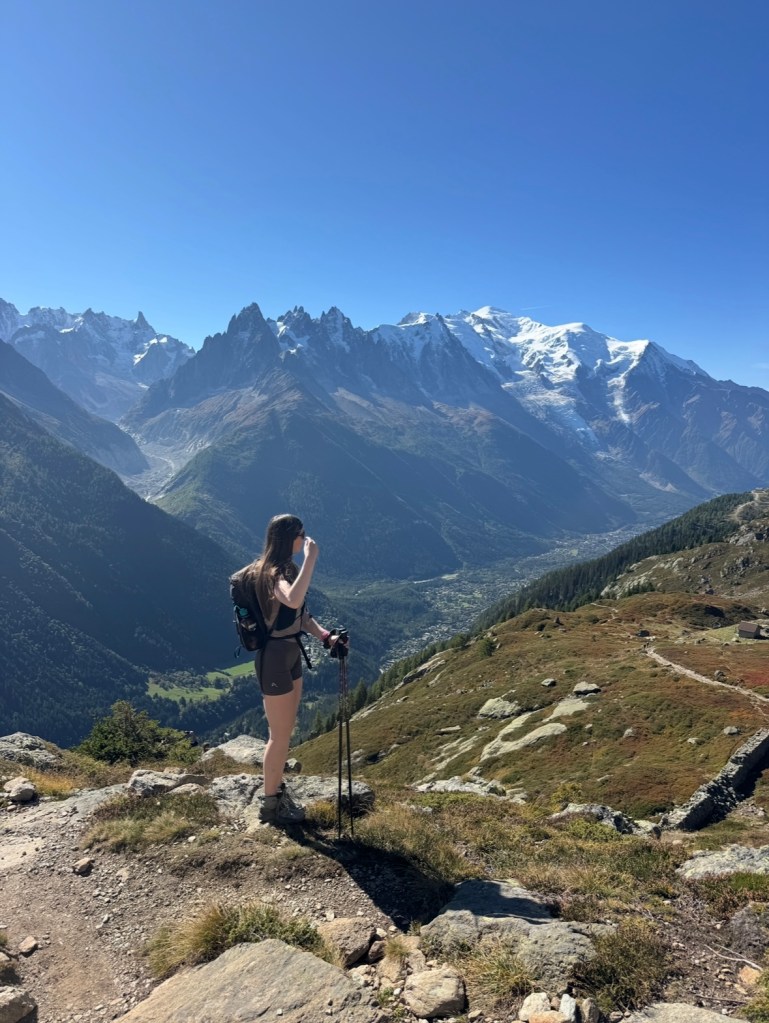
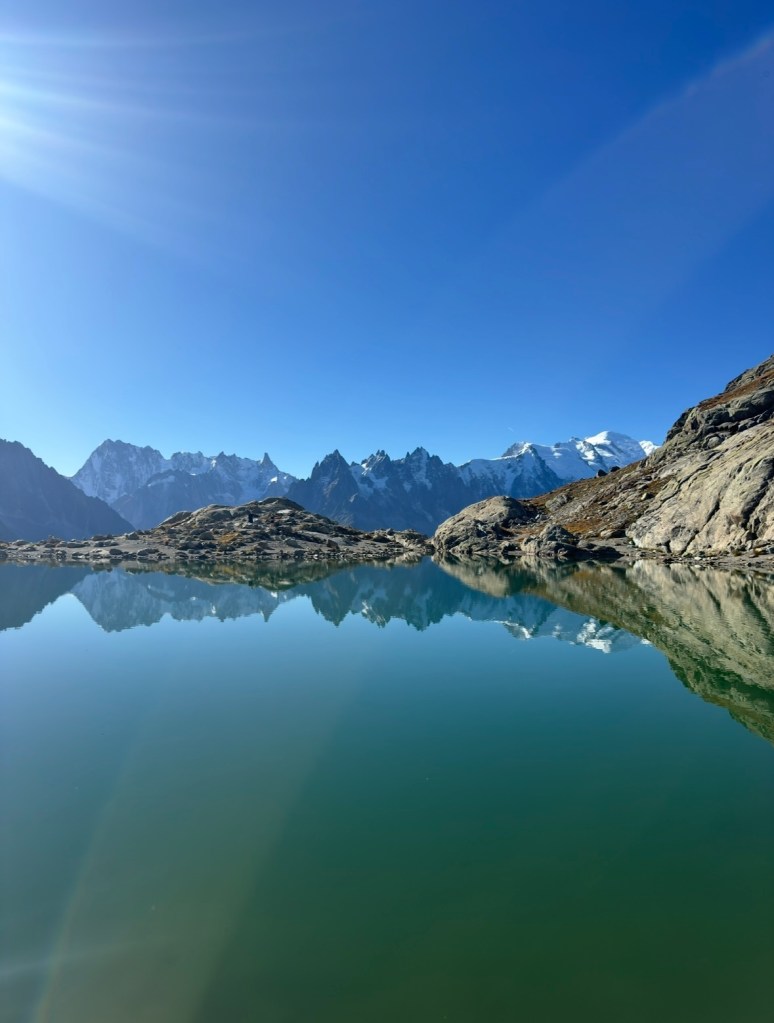
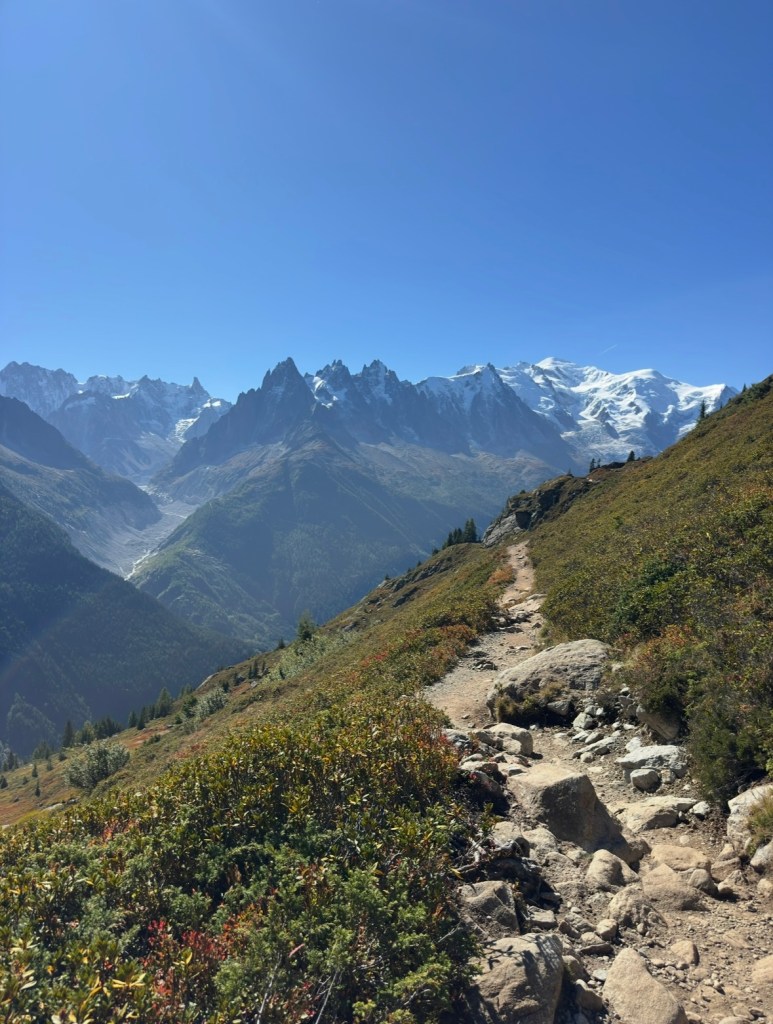
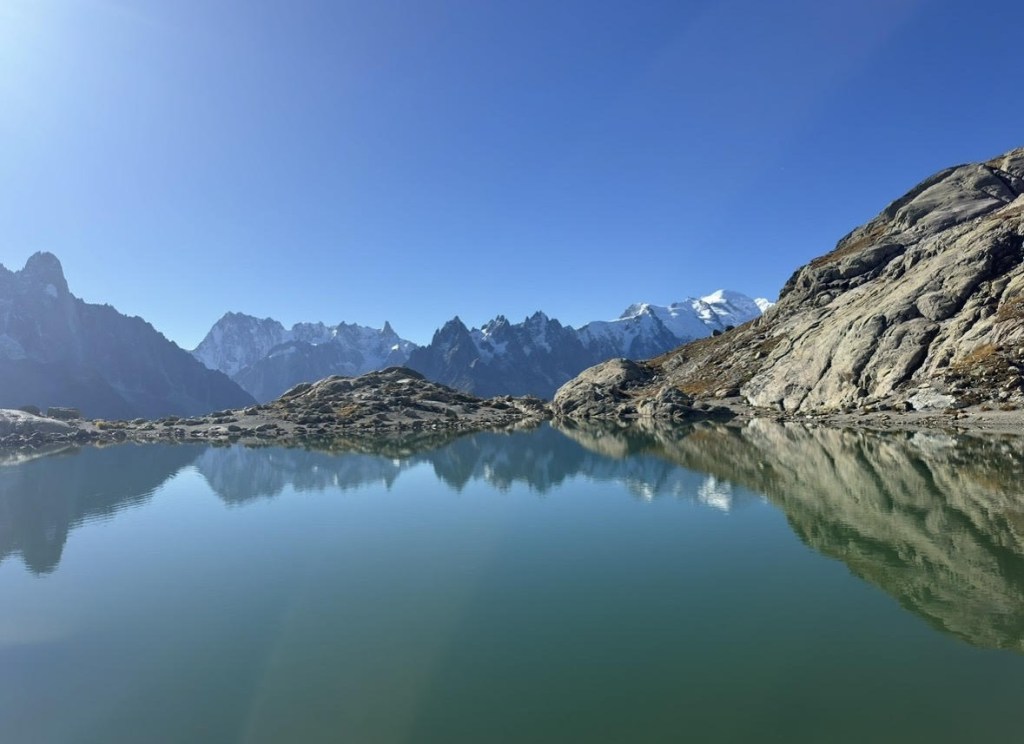
For day 3, I was ticking off another bucket-list hike- Lac Blanc, known for it’s reflection of the Mont Blanc Massif. This hike had been on my list for so long and we couldn’t have asked for better weather for it.
We took the bus from Chamonix Sud to Les Praz- La Flégère which left us at the cable car station in about 20 minutes. From there we got the short Flégère cable car which cost €24 return, which we booked online the day before.
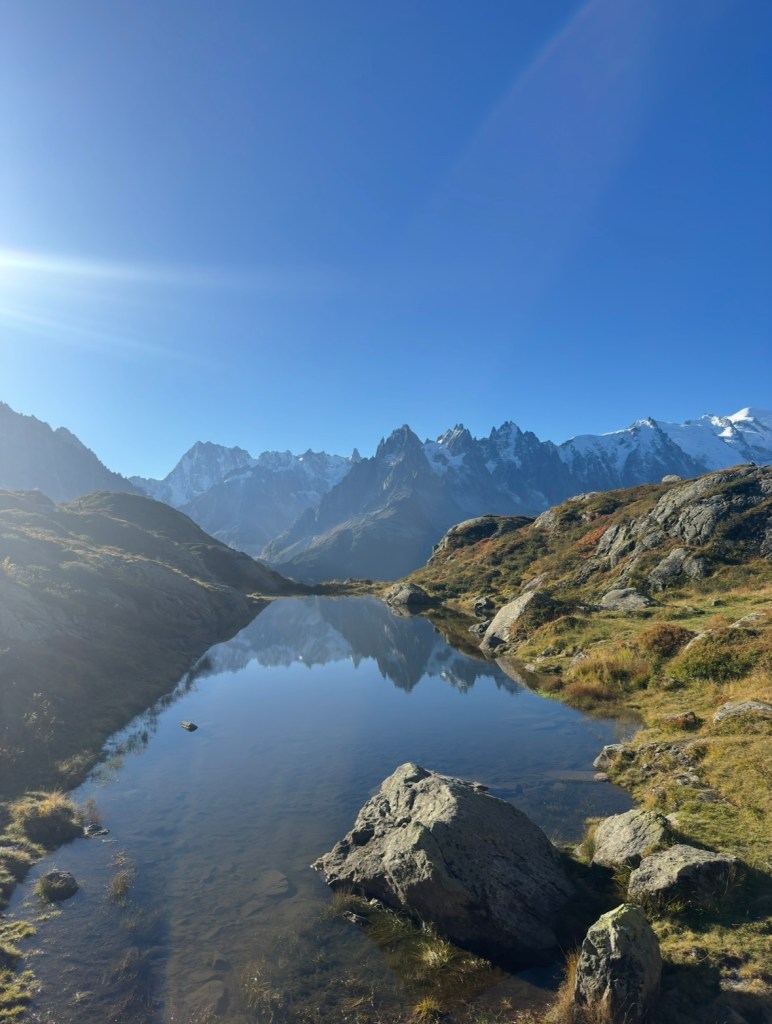

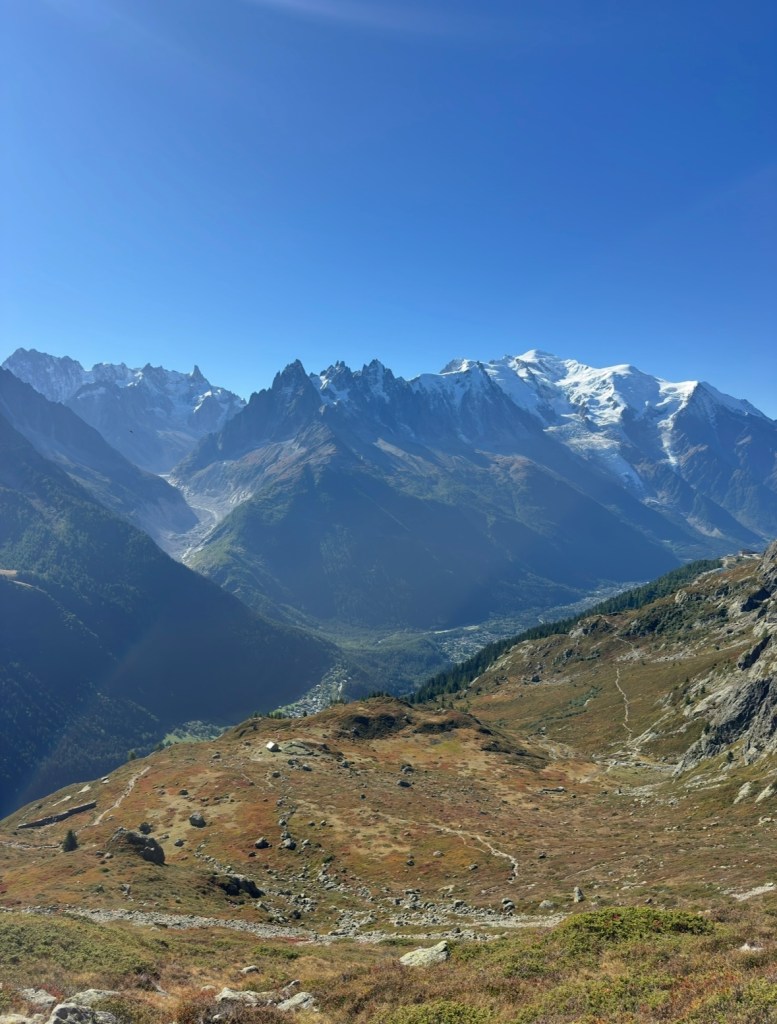
From the top of the cable car, the full loop is about 9 km and 540 m of elevation gain. It took about an hour to reach Lac Blanc, and once again the views along the way were incredible. The mountain range around Chamonix is so unique and this hike offers some of the best views of it. The whole loop took us around three hours total. This trail is also famous for ibex sightings, although unfortunately we didn’t see any that day.
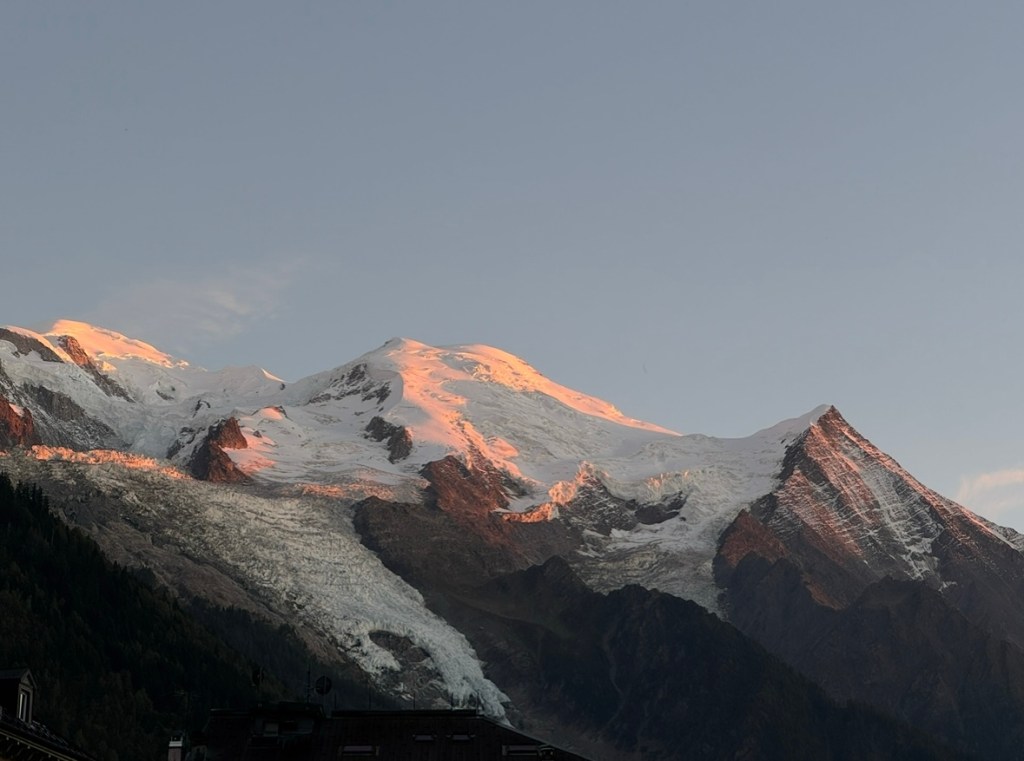
After taking the cable car and bus back down to Chamonix, we went for dinner at Synge & Co., which has great food and a view of Mont Blanc. We ended the evening watching the sunset onto Mont Blanc by the river.
Day 4: grand balcon nord and lac bleu
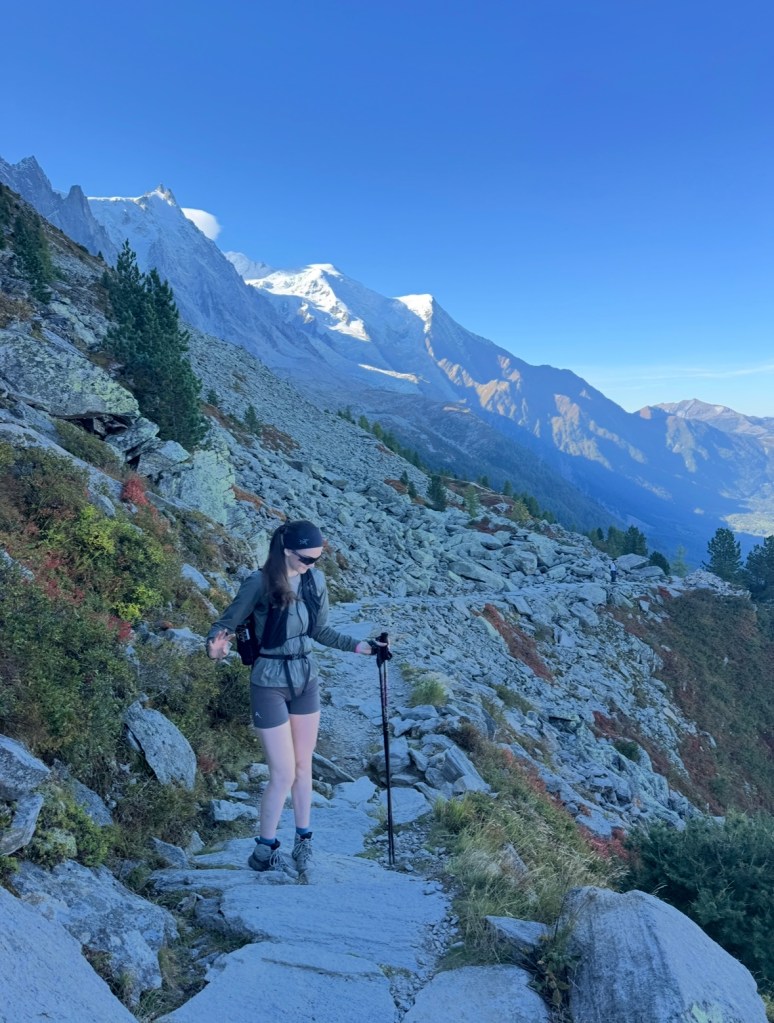

For our fourth day we hiked another one of Chamonix’s popular trails, Grand Balcon Nord. We took the train up to Montenvers Mer De Glace and started the trail from there. We bought one-way tickets (€31) and hiked along the balcony to the Plan de l’Aiguille cable car, where we got one way tickets back down to Chamonix (€22.50).
This hike can also be done in reverse, but starting from Montenvers means you’re walking towards Mont Blanc, which I think makes the hike more rewarding. This hike was actually really quiet mid-September, even though it’s one of the most popular trails in Chamonix.
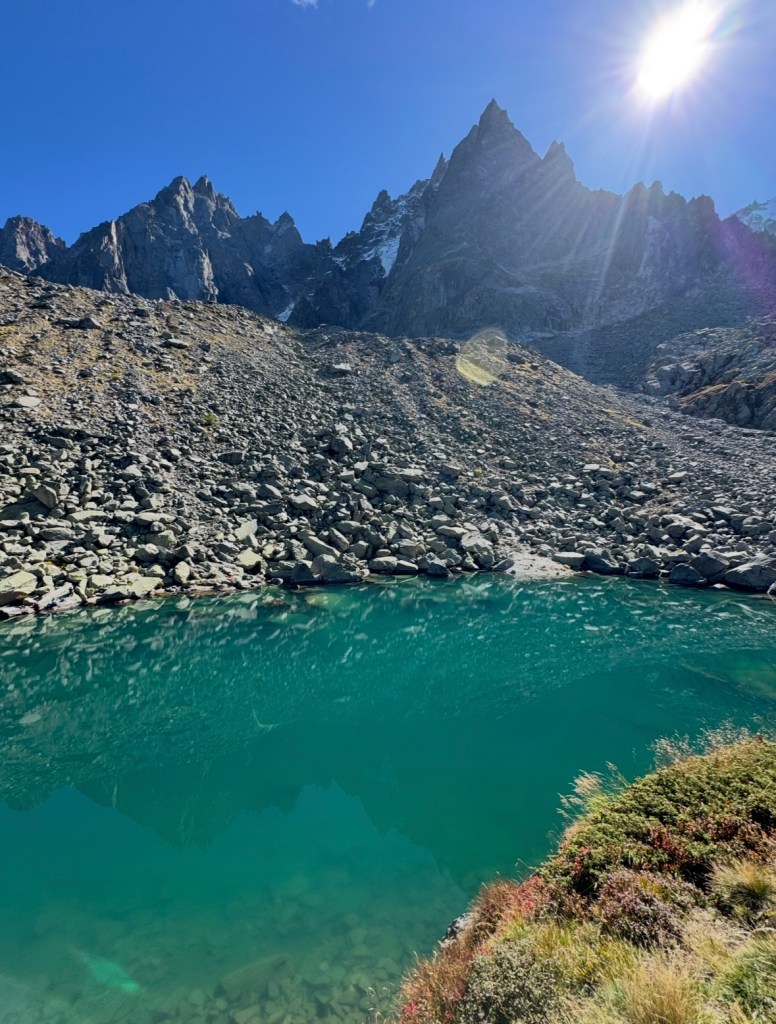
When we arrived at the cable car station we took a short 15 minute detour to Lac Bleu, a small lake with unreal turquoise water.
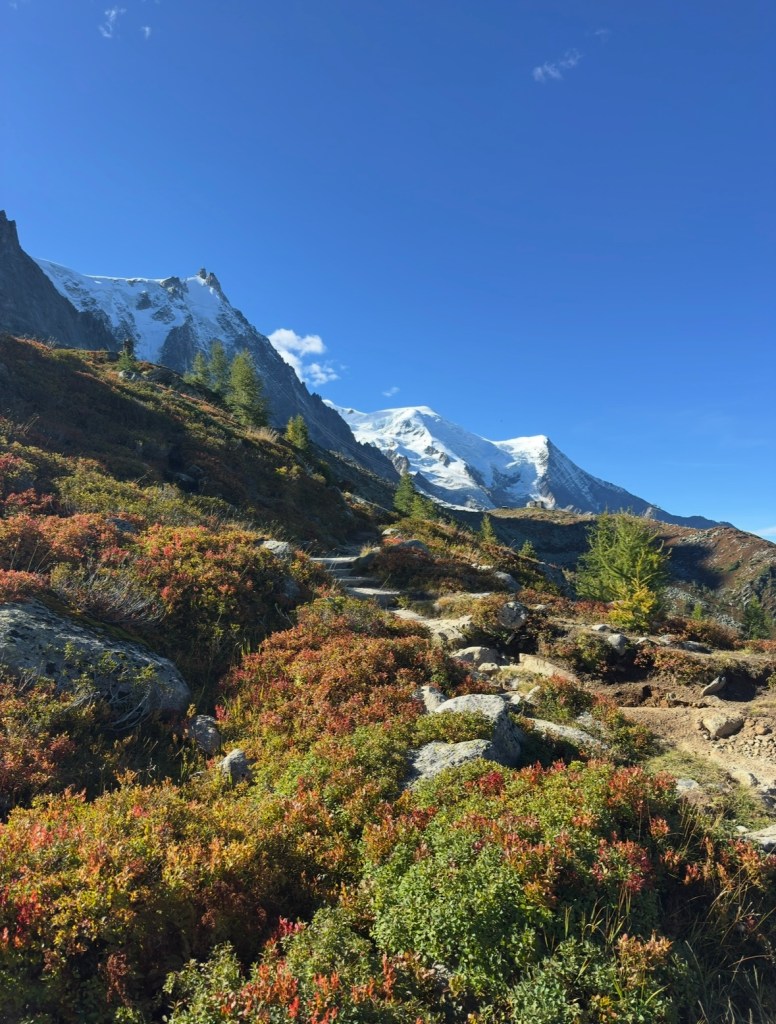
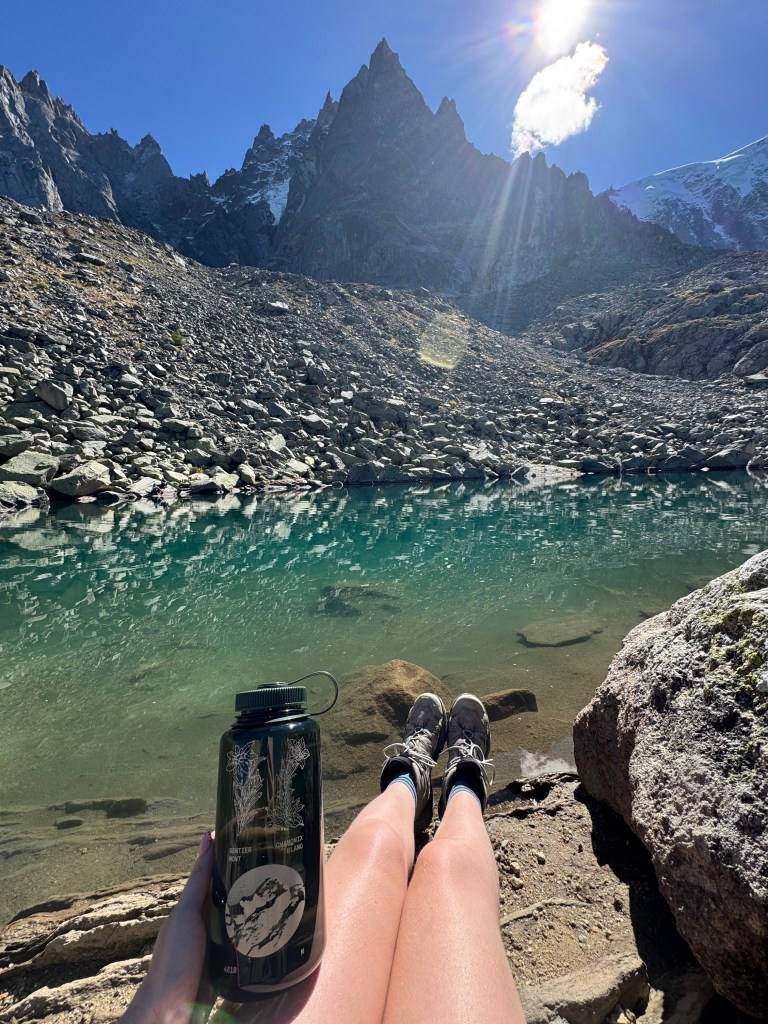
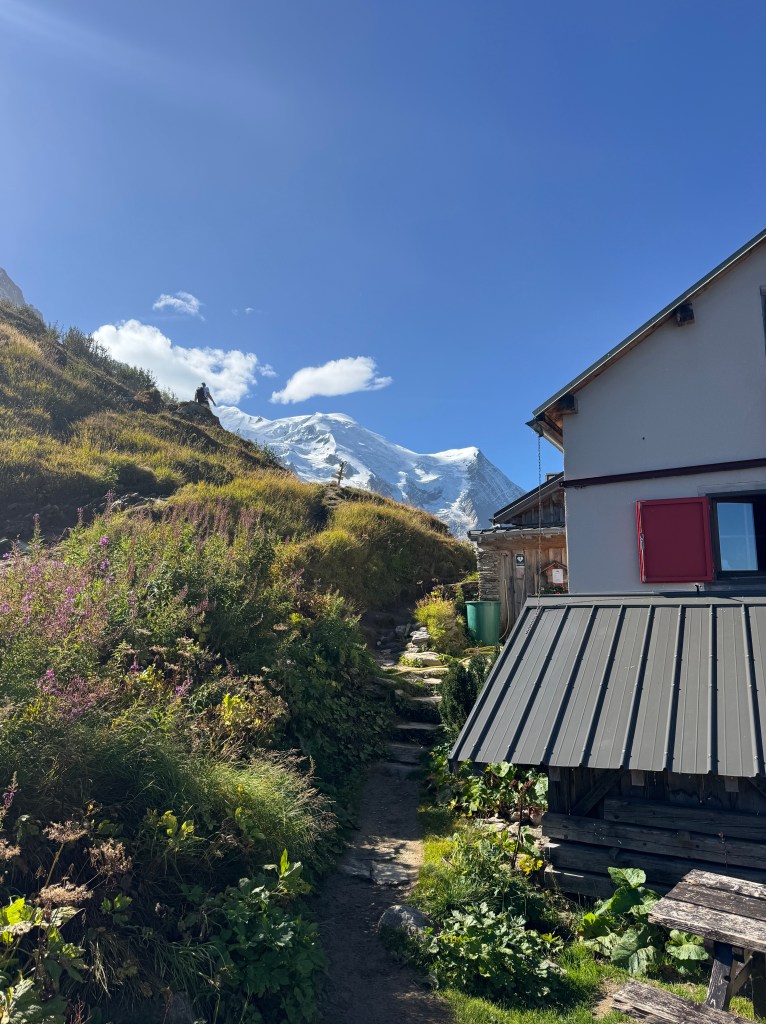
The full hike was 8.9 km total with 624 m elevation gain, and was another perfect day out.
If you’re looking for a treat after hiking, the Mer De Glace ice cream shop has the most sorbet flavours I’ve ever seen- pineapple, apple, lime, mango, the list goes on.
day 5: slow day in chamonix town
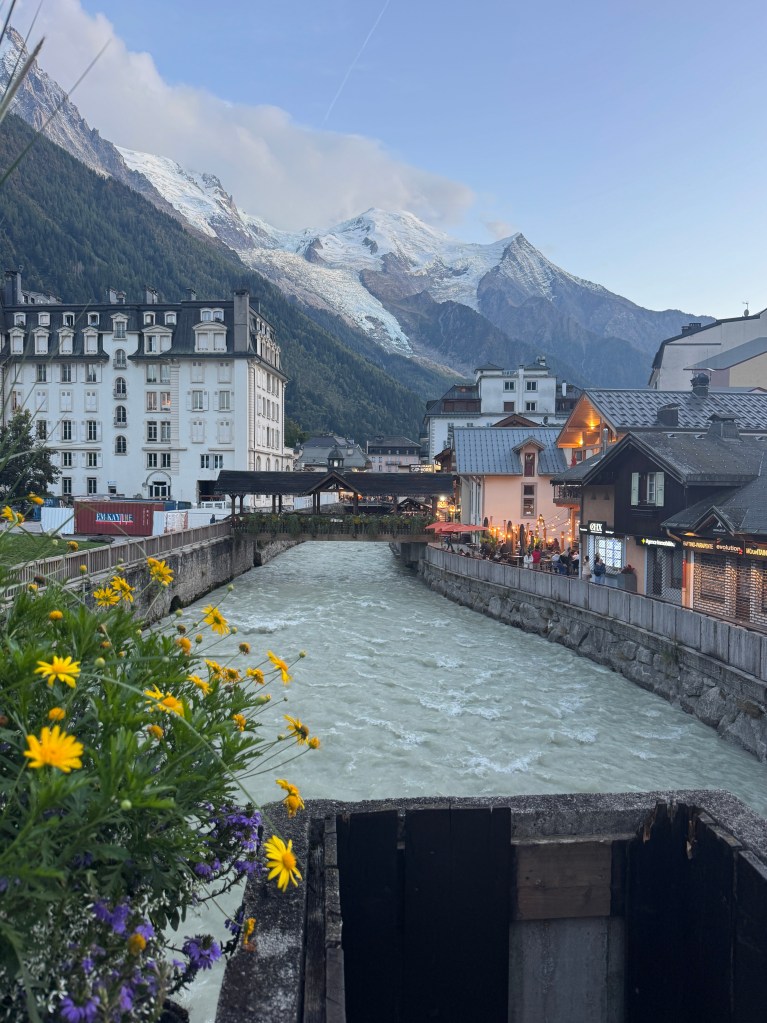
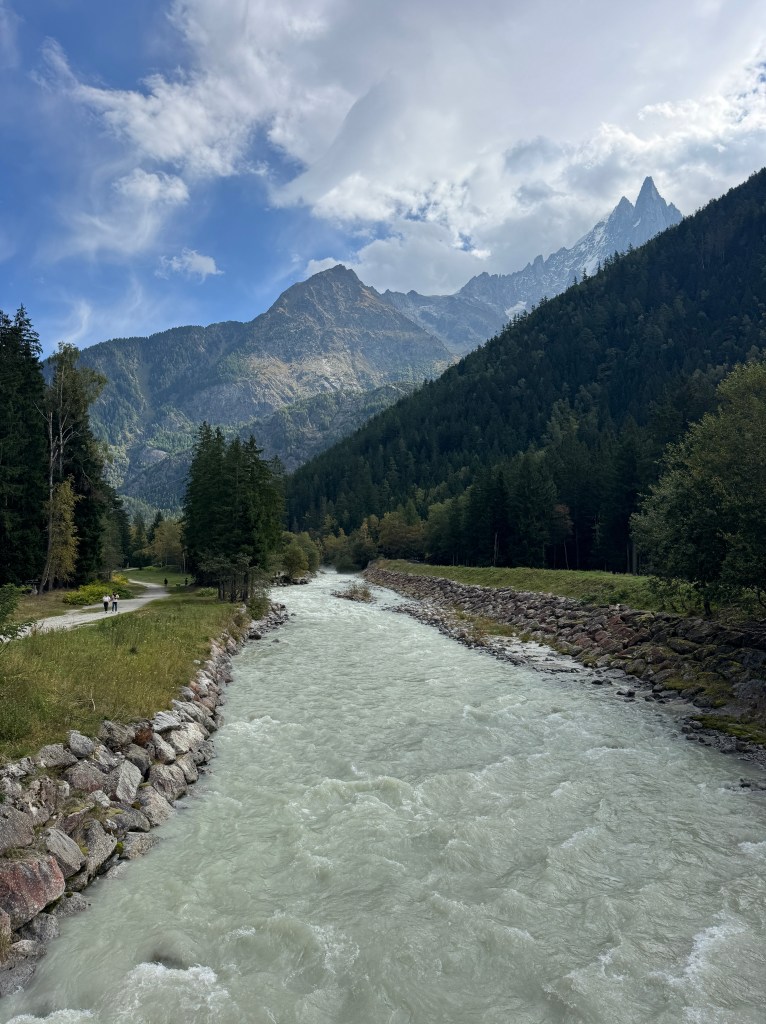
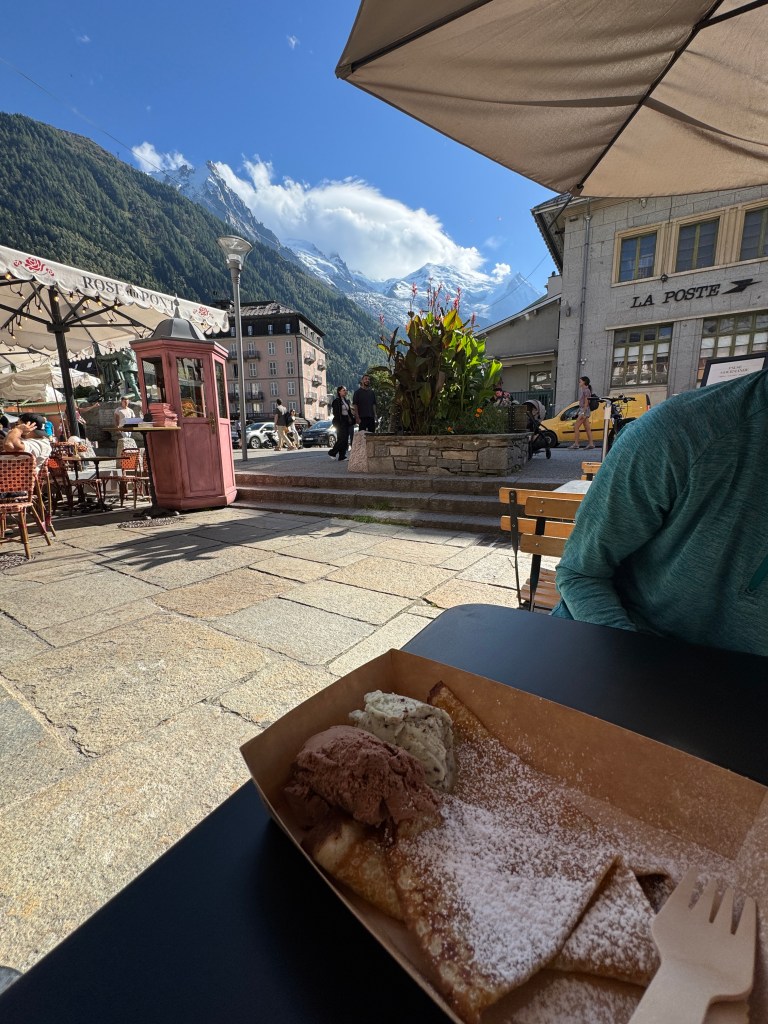
For our last day, we took it easy after 3 full days spent waking up early and hiking. We walked around Chamonix Woods, and even for a short walk right in the town, there was still amazing views of the mountains.
We spent the afternoon exploring the town one more time before leaving- we stopped for crepes and ice cream at Amorino Gelato and stopped in a few shops before having to leave one what I think is definitely one of the best towns in the alps.
By the end of this trip I was looking up apartments to rent in the Chamonix and scrolling through job applications because it really is that good. I had been craving a hiking holiday to clear my mind and these five days were literally the perfect remedy.
chamonix hiking essentials
Best time to visit: Late June to September is the peak season for hiking. We first visited in early June, and many trails were still covered in snow and inaccessible. On this trip, we went in mid-September and had perfect conditions- clear skies, no snow, and temperatures up to 26°C.
July and August are ideal for green trails and wildflowers but are also the busiest months.
Getting Around: The local bus network is reliable and affordable, with regular connections to all major trailheads. We used Google Maps to check times and routes, and most buses arrived exactly when they were supposed to.
Difficulty: The hikes we did ranged from moderate to challenging:
La Jonction– Hard (long distance + steep climb)
Lac Blanc / Grand Balcon Sud– Easy-Moderate
Grand Balcon Nord / Lac Bleu– Easy- Moderate
Chamonix Woods– Easy
Packing Tips: Bring layers– even in summer, temperatures can change quickly with altitude.
Sunscreen, a water bottle or bladder (which I found really helpful), and snacks for the longer trails.
If you’re doing La Jonction or any full-day hike, trekking poles make a huge difference on the descent.
Budget Tip: Staying in accommodation with a kitchen can help cut costs by cooking some meals at home in the evenings.
Planning your own trip to Chamonix? Save this guide or tag @trekoraofficial if you visit — I’d love to see your adventures.
 Trekora
Leave a comment